
Why Do I Hear “Heat Pump” When We Used to Say “Furnace” and “Air Conditioner”?

If you’ve been shopping for a new furnace or air conditioner lately, you might have noticed a change in terminology. Where we used to say “air conditioner” or “heater,” now everyone’s talking about “heat pumps.” That sounds okay for winter, but it sounds like the opposite of what you want in the summertime. So what gives? Is a heat pump something totally new?
Let’s look at why heat pumps are gaining popularity and how the shift to heat pumps benefits your home and the environment.
First, What Does HVAC Stand For?
HVAC stands for Heating, Ventilation, and Air Conditioning. It’s the umbrella term for systems that heat and cool building interiors, including furnaces, boilers, air conditioners, fans and other ventilation systems. If you called a contractor to repair your home’s heating or cooling system, that HVAC professional would most likely work on your home’s furnace for heat or air conditioner for cooling. The majority of HVAC systems in California consist of a gas furnace and an electric air conditioner.
So, What’s a Heat Pump, And Why Haven’t I Heard of Them Before?
Heat pump refers to technology that moves heat rather than creating it. Heat pump technology isn’t brand new. It’s been around for 100 years, mostly for industrial applications, but heat pumps are getting a lot of attention lately because they’re more energy-efficient, climate-friendly, and cost-effective over time than traditional boilers, furnaces, and air conditioning units.
Where heat pumps seem to have only recently come onto the scene, heat pump technology is based on principles of thermodynamics published by British physicist Lord Kelvin in the 1850s. Heat pumps started to be commercialized in the United States in the 1940s to heat and cool buildings. But their more recent popularity is largely attributable to innovations in efficiency and cost-effectiveness made in the 1980s by manufacturers in Japan and Europe, where energy efficiency requirements are stricter than in the US.
In the US, you’ll find heat pump technology commonly powering motors and condensers for clothes dryers, water heaters, refrigerators, and heating & cooling systems.
Fun Fact: You probably already have a heat pump in your house! For over a century now, standard household refrigerators have utilized heat pump technology.
How does a Heat Pump Both Heat and Cool a House?
In the winter, the heat pump pulls heat from the outside air (yes, even when it’s freezing outside!) and brings it inside. In the summer, the heat pump reverses the process, removing heat from your home and releasing it outside, just like a traditional air conditioner. Here’s a 5-minute video that explains how heat pumps work to condition air.
Video courtesy of Rewiring America
Why the Shift to Heat Pumps?
Heat pump HVACs are gaining popularity in the US because they are a single system that can both heat and cool your home, replacing the need for traditionally separate units for heating and cooling. We should clarify, though, that a single heat pump system can’t operate in both heating and cooling mode at the same time.
Another driver in this shift in the HVAC market is electrification. A priority for California, electrification is a key strategy for the state to move away from fossil fuels and decarbonize in favor of clean power sources like solar, wind and hydropower. The California all-electric home of the future is one that does not burn carbon- and carbon monoxide-emitting fuel sources like natural gas, propane, or wood, thereby improving indoor and outdoor air quality.
-
Energy Efficiency
Heat pumps use electricity to move heat rather than generate it, which is the reason heat pumps are considered efficient. The U.S. Department of Energy estimates that air-source heat pumps (ASHPs), the most common type in the US, can save 75% in electricity usage compared to traditional furnace or baseboard heating systems. For you and your home, that means less wasted energy.The U.S. Environmental Protection Agency advises that a heat pump system match the size and capacity of the space it is intended to heat and cool, as “a heat pump system that is too large or too small could reduce energy efficiency and increase maintenance.”
-
Climate Goals
California is leading the charge toward a cleaner energy future. Heat pump technology is a key part of the state’s climate action plan, and the California Energy Commission has expanded the use of heat pumps via its Building Energy Efficiency Standards For Residential And Nonresidential Buildings, also referred to as Title 24 guidelines.California makes considerable gains toward its ambitious goals when heat pumps replace natural gas-fueled systems, reducing indoor air pollution risks and overall greenhouse gas emissions to improve Californians’ collective health.
-
All-in-One Heating & Cooling with Multiple Configuration Options
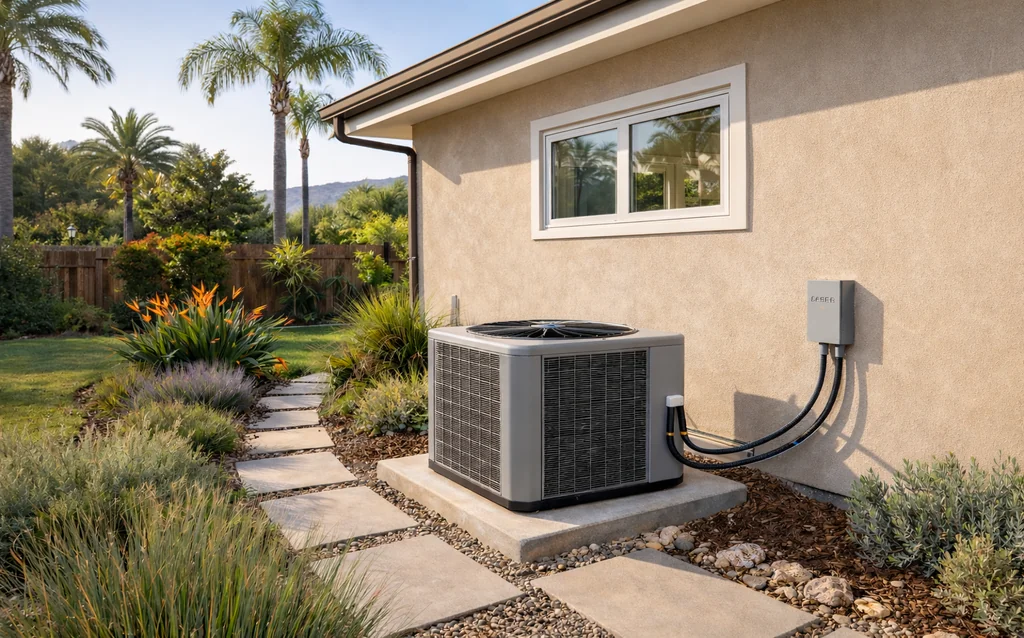
Instead of requiring separate systems for heating and cooling, a heat pump does it all. You might hear these heat pump-based HVAC systems marketed as ducted or ductless heat pump systems.Similar to traditional "central air" or forced air systems, ducted systems involve an outdoor compressor unit that pushes conditioned air through air ducts (think sheet-metal tubes in your attic or crawlspace). Ductless systems, commonly called mini-splits (or minisplits), also use an outdoor compressor unit that runs one or more indoor air handlers, which HVAC professionals call mini-split "head units." Consumers sometimes choose mini-splits when they want to vary heating and cooling by room.
Most heat pump mini-splits also utilize inverter technology. Outside the United States, the term "inverter" is synonymous with mini-split. Here in the US, you might hear inverter technology referred to as:
- variable-speed heat pumps
- variable-capacity heat pumps
- modulating compressors
- high-efficiency heat pumps
Whether it’s a ducted or ductless heat pump HVAC system, with or without inverter technology, their all-in-one heating and cooling capability can offer less equipment, less maintenance, and greater simplicity for homeowners.
The Bottom Line on a New Heat Pump for California Homeowners
If you’re considering an upgrade to your home’s heating and cooling system, switching to a heat pump could be a smart move.
Some electricity providers offer "electrified home" rate plans, like this example from PG&E, designed specifically for homes that are shifting from natural gas to electricity or that have increased electric usage as a result of electric vehicle charging stations or heat pump installations. Be sure to inquire with your local electric provider if they have an "electrified home" rate plan and whether it is right for you.
Not only can a heat pump save energy, but it may also qualify you for financing programs like ours, which is designed to make energy-efficient upgrades more affordable for Californians. GoGreen Financing is a state-backed lending program for homeowners and renters to upgrade to appliances with heat pump technology, in addition to dozens of other energy-efficient home improvements, all without breaking the bank.
So, next time someone says “heat pump,” you’ll think “thermodynamics” and “Lord Kelvin” and know they’re talking about the future of equipment and appliances and how they more efficiently move heat for heating and cooling. Heat pump isn’t a buzzword to sell you a new air conditioner; it’s a smarter, cleaner, and more efficient technology for keeping your home’s energy use at a minimum.
See heat pumps and all the other Home Energy Efficiency Upgrades eligible for GoGreen Financing in California.
Want a deeper dive? Learn more about different types of heat pumps and how they work. Or, read more about Lord Kelvin’s contributions to science.
For more energy-wise articles like these, sign up for the GoGreen Home newsletter.
Related GoGreen Articles
Detailed, easy-to-understand breakdowns of upgrade options, financing benefits, and technology advancements.
-

Curtains, Blinds, Shades, and Films—More Than Just Window Dressing for Energy-Efficient Living
Window coverings are more than just décor. Choose wisely, and your window treatments can enhance the energy efficiency of your windows, keeping you cozier in winter and cooler in summer. Learn how different window covering options perform and how to make them work harder for you seasonally, plus which make the cut for GoGreen Financing. Read more
-
Phantom Power – Electricity You’re Paying for But Not Using (And How to Stop It)
This very minute, there are probably dozens of devices around your house that are using electricity even when they are not in use. These energy vampires are costing you money and wasting energy. Here’s how to control them to save both energy and bucks. Read more
-

When Is Clean Energy Also Cheap Energy?
Discover the best and worst times to use electric power in California. Learn when electricity is cheapest, when clean energy is most abundant, and how to plan your energy use to have both clean and cheap power. Read more