

The Most Overlooked Indoor Air Leaks


When you heat or cool your home, you know that leaks waste money and energy because they allow conditioned inside air to mix with unconditioned outside air. But here’s what you probably didn’t know: not all home air leaks are direct with the outdoors.
Some of the biggest energy wasters are small gaps inside the house—leaky spots you barely think about that make your home’s heating and cooling systems work harder, especially in California’s coastal and marine areas where homes are most susceptible to moisture intrusion from outside air. Here’s how to locate and seal up the pesky air leaks that are hiding in plain sight inside your home.
How to Find and Seal Hidden Energy Leaks Inside Your Home
Some of the sneakiest energy leaks and moisture intrusion points are in a home’s interior. They allow air flow between your nicely heated or cooled rooms and the building material layers that separate inside from outside, such as attics, basements, crawl spaces, and walls.
Here is where to check for interior home air leaks:
- Around electrical outlets, switch plates, and lighting fixture mounts
- Where plumbing, HVAC, or vent pipes enter through walls or ceilings (commonly in bathrooms, kitchens, laundry rooms, and garages)
- Where walls meet ceilings or floors, especially above crawl spaces or along exterior walls
- Along crown molding
- Along baseboard
- Around the inside (and outside) frames of exterior windows and doors
Easy Fixes for Sneaky Leaks
- Install light switch sealer or outlet sealer (a.k.a. gaskets) behind switch and outlet covers
- Use expanding foam spray to seal where kitchen and bathroom sink pipes enter the interior walls
- Insulate and gasket your attic hatch cover/door
- Caulk along the top/bottom/sides of baseboard or crown molding and wherever wall framing meets other surfaces
Small fixes can add up to big savings. By sealing indoor gaps, you’ll reduce drafts, moisture, and noise—creating a more comfortable and energy-efficient home. And remember, GoGreen Home allows you to use up to 30% of your loan through its participating lenders to make other home improvements like weatherproofing or even non-energy related home improvements such as landscaping.
See all energy efficiency improvement projects eligible for GoGreen loans
Related GoGreen Articles
Detailed, easy-to-understand breakdowns of upgrade options, financing benefits, and technology advancements.
-

Weatherproofing Doors: An Open and Shut Case
If your door rattles in its frame or you can see daylight around the edges, your energy dollars are slipping out every time you close it. Properly sealed doors make a big difference in comfort and cost—especially during California’s hot summers and cool evenings. Read more
-
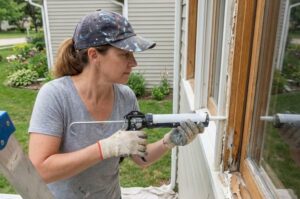
Sealing the Building Envelope: First Line of Defense in Weatherproofing Your Home
Let’s face it—“leaky” never sounds good. When you heat or cool your home, leaks waste money and energy because they allow conditioned air to escape or unconditioned air to enter. Read more
-

Seal Existing Windows or Finance New Ones
With windows responsible for roughly 30% of your home’s heat gain and loss, according to the U.S. Department of Energy, sealing your existing windows delivers big bang for your buck. Read more